

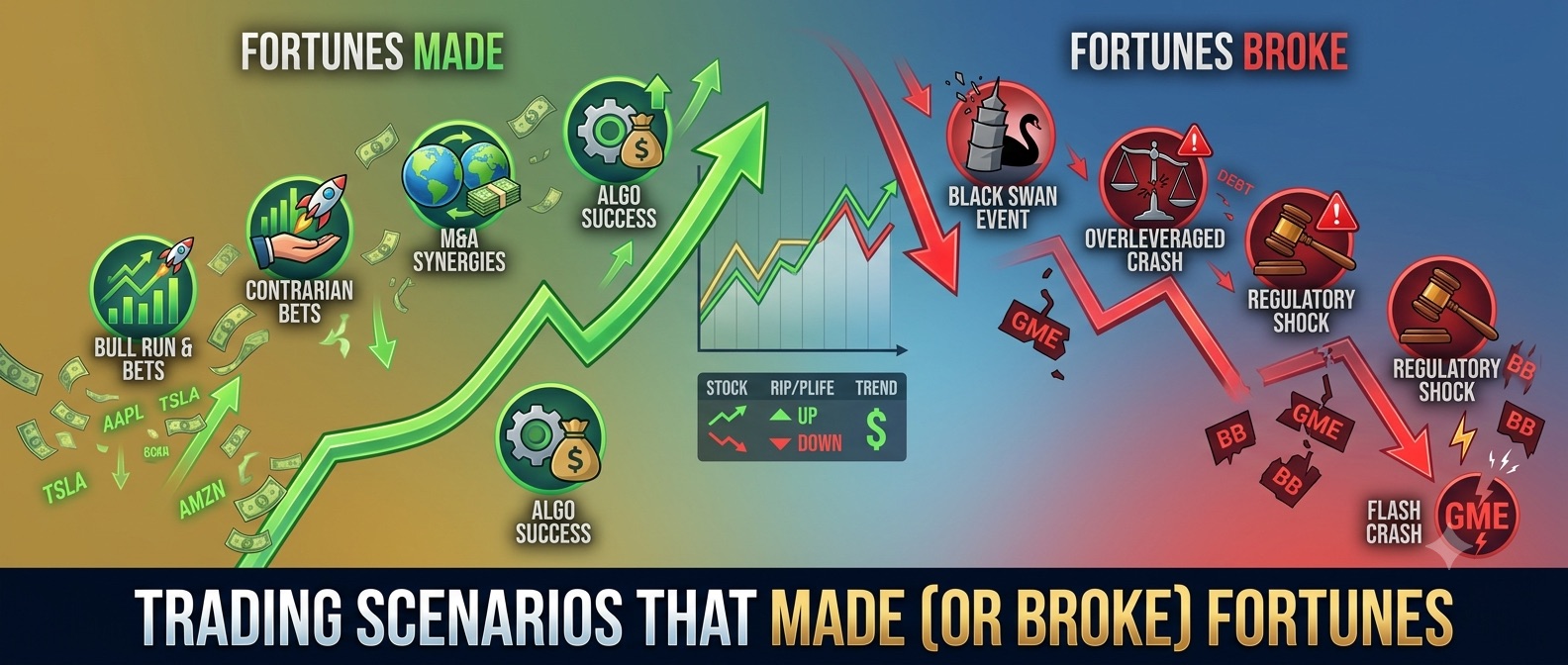
They say history doesn’t repeat itself, but it often rhymes. For a trader, looking at the past isn’t about nostalgia it’s about recognizing the “tells” that the market gives off right before a massive move. Whether it’s a rocket launch in the tech world or a “glitch” in the commodity markets, these “If/Then” scenarios show exactly why having the right data at the right time is the only thing that matters.
Scenario 1: The “Musk Divergence” (Tesla vs. SpaceX)
The Setup: In early 2026, rumours were flying about SpaceX finally going public. Most retail traders assumed that because Elon Musk was winning, everything he touched would go up.
- IF you bought Tesla (TSLA) on April 1, 2026, thinking the SpaceX IPO news would lift all boats: THEN you sat through a brutal 10.5% drop over the next 10 days. Why? Because big institutional “whales” were actually selling Tesla to free up cash to buy the SpaceX debut.
- IF you waited for the “Synergy Signal” on May 1, 2026, when Tesla disclosed massive vehicle sales to SpaceX: THEN you caught a 13.8% rally in just two weeks. The market didn’t care about the hype; it cared about the actual money changing hands between the two companies.
Scenario 2: The “Silver Slam” of January 2026
The Setup: Silver was the “it” trade of the new year, doubling in value throughout 2025 and jumping another 50% in early January. FOMO (Fear Of Missing Out) was at an all-time high.
- IF you followed the “Retail Herd” into leveraged Silver ETFs at the end of January: THEN you experienced the largest one-day loss since the 1980s, a staggering 30% crash that wiped out many accounts overnight.
- IF you were tracking the “ETF Premium” (when the price of the fund is way higher than the actual metal it owns): THEN you would have seen the “exit sign” flashing bright red. That gap between the fund price and the metal’s real value was a classic “bubble” signal that institutions used to time their exit while retail was still buying.
Scenario 3: The “Earnings Gap” Strategy
The Setup: A blue-chip giant like Amazon or Apple is about to report earnings. You’re deciding whether to buy the stock the day before or wait until the market opens the next morning.
- IF you tried to “Day Trade” the results after the market already opened: THEN you likely saw “choppy” price action with no clear direction. Data shows that for most big stocks, the market has no “bias” during the actual trading day after news breaks.
- IF you played the “Overnight Gap” by positioning for the opening bell: THEN you had a statistically higher chance of success. In 25 out of 30 major S&P 100 companies, positive earnings surprises were followed by positive “overnight” moves. The money was made while the world was sleeping, not while the ticker was screaming.
Trade the Future, Not the Noise, with Corp-Ex
As these examples show, the difference between a “winning trade” and a “bag-holder story” usually comes down to one thing: context. Corp-Ex specializes in giving you that context through around-the-clock analysis that separates the “Tesla Sympathy” traps from the real “Synergy” gains.
While others are reacting to headlines, our dedicated team with more than two decades in this field is looking at the “plumbing” from ETF premiums to SEC filing red flags. We help you build the “If/Then” scenarios for tomorrow’s markets, so you’re never caught on the wrong side of a 30% slide.
What Can We Do to Help?
At Corp-Ex, we provide the tools needed to turn historical patterns into future profits:
- “Sympathy Trade” Monitors: Our platform automatically flags when news in one sector (like SpaceX) is likely to cause a “diversion drop” in another (like Tesla).
- Bubble-Alert Scanners: Track the gap between ETF prices and their Net Asset Value (NAV) in real-time to spot when a “Silver Slam” style correction is brewing.
- Overnight Gap Analytics: Access proprietary data on how specific S&P 100 stocks historically react to earnings surprises during the “hidden” overnight session.
- 24/7 Expert “War Room”: Join our veteran analysts (20+ years experience) as they break down live events and apply these historical “If/Then” lessons to current setups.
Disclaimer: This article is for informational purposes only and does not constitute financial, investment, or legal advice. Trading in financial markets involves significant risk, including the potential for loss exceeding initial deposits. Past performance is not indicative of future results, and users should consult with an independent financial advisor prior to making any investment decisions. Corp-Ex is a data and technology provider and does not act as a fiduciary or provide specific investment recommendations.